Taking money from spreadsheets to real life
Quicken, Assoc Creative Director, 2025-Current
Fellow creatives: Sara Reese, Evan Verilli, Courtney Funk, Travis Bye
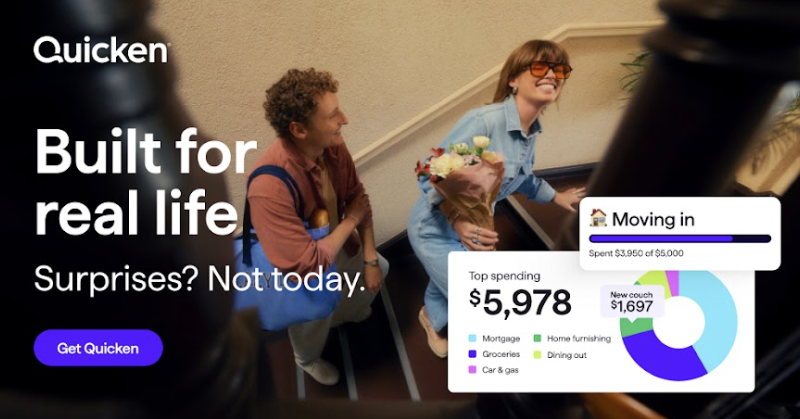
Managing money is deeply personal, yet most financial tools treat it like a cold math problem. Grounded in the insight that people don't need another ledger, they need a guide that tells them what to do next, we transformed Quicken’s communication strategy. By designing human-centric UX flows, anchoring copy in everyday moments, and building an adaptive AI framework, we shifted the conversation from rigid data tracking to real, visible progress, resulting in a 24% brand preference lift and an $8M per month conversion increase.
Do not fear the robot behind the curtain
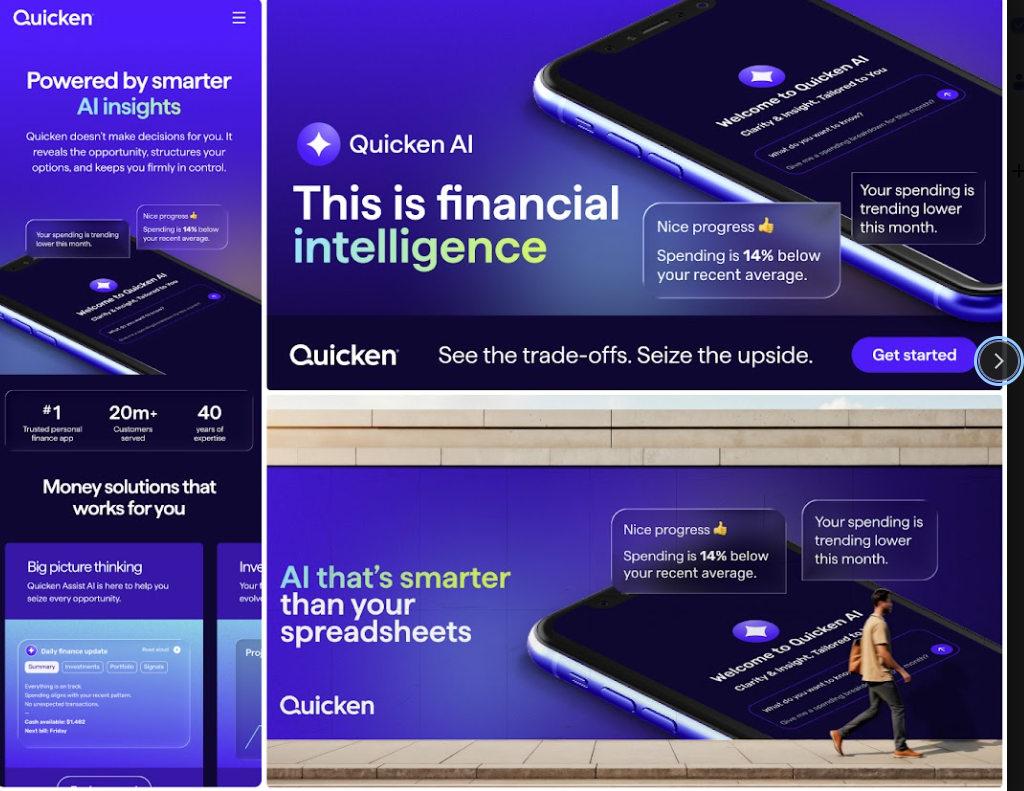
Introducing AI to a 40-year-old, trusted brand with 20 million users can easily backfire if it feels cold or robotic. We wagered that AI shouldn't be a flashy headline; it should be a quiet engine beneath the surface. The rule was simple: AI is felt, not announced; the human always decides; and every smart feature must anchor to a typical life decision. Customer research agreed.
Like this … but not so much that
From Monarch to Mint to Quicken
When personal finance apps feel like a dime a dozen, how do you sharpen your story and lean into what makes your brand unique? I like to think of this in business terms as going from red sea to blue ocean (nerd).
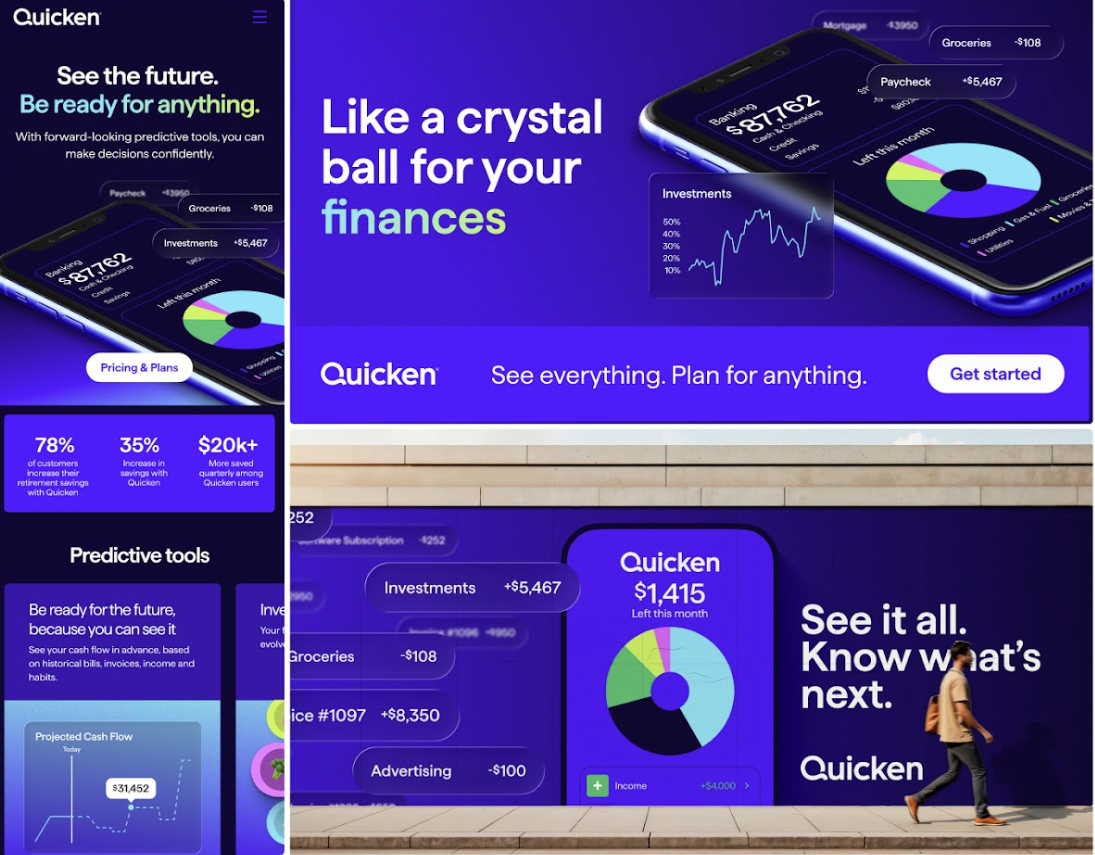
Most personal finance tools only look backward, showing users where their money has already gone. Quicken was built to solve a more valuable problem: directing your next financial decision. Designed for regular people managing daily expenses & small business owners, Quicken sets itself apart by moving beyond basic tracking. It provides real-time clarity and actionable guidance. The platform’s core mission is simple: help users understand their current financial health, navigate their next steps, and build long-term wealth securely.

Creative performance overview
I authored and led Quicken's Creative Performance Overview, a cross-functional framework that translates agency performance data, A/B tests, and user research into concrete creative direction for the entire team.
The analysis showed that ads anchored in specific financial moments converted 31% more efficiently than benchmark, and that UI-forward formats consistently ran under $180 CPA — findings that became the basis for a "learning → implication → action" model now used to brief and evaluate all creative work at Quicken.
Sharing customer love
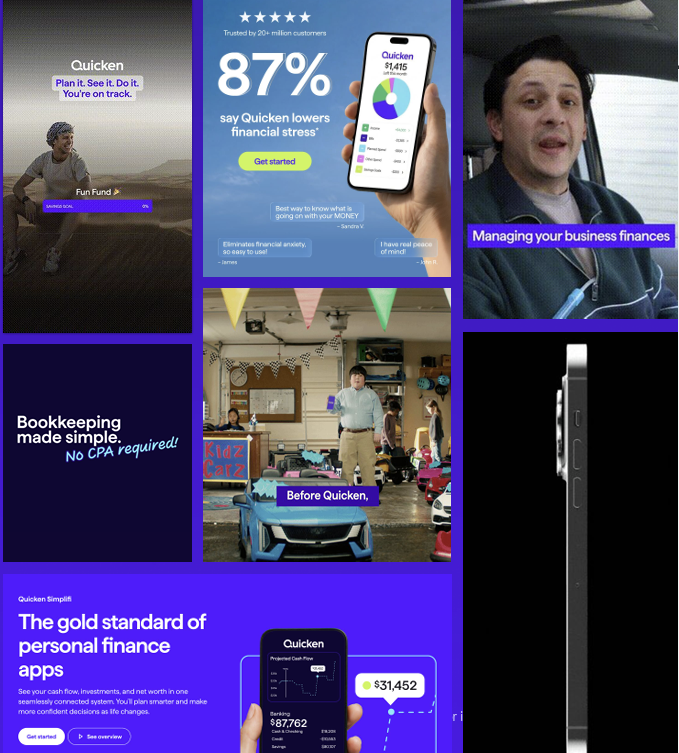
Pulling from customers who rated Quicken a 9 or 10 in our NPS survey, I led Quicken's first customer video testimonial program, building the sourcing strategy, screening criteria, and interview framework from the ground up.
I defined the focus areas across our two core products and wrote the interview guide that shaped every conversation, turning it into a repeatable process rather than a one-off shoot. I worked closely with Sara Reese, Courtney Funk, Kate Pujala, and Alexis Mejia to source, screen, and produce the work. The program delivered Quicken's first library of authentic, story-driven customer video content — 8 testimonials in its first phase — for use across paid media, landing pages, and social.
Want to make something that grows? For creative leadership, a copy lead, or why the Oxford comma just makes sense, say hi at cassese1@gmail.com.
The Oxford comma, in fact, makes a lot of sense.